Coastguard Agency (GOV.UK)
Streamlining how ship operators obtain and manage certificates.
Client:
maritime coastguard agency
roles:
PROJECT LEAD, UX DESIGN, service DESIGN
DURATION:
5 MO
YEAR:
2024
Overview
I led a 5-month Discovery & Alpha project with the Maritime & Coastguard Agency (MCA), designing a new digital service for ship operators to replace a manual, paper-based certification process. The service met the GOV.UK Service Standard and passed an intensive 6-hour Alpha assessment, receiving approval to proceed to private beta.
Results:
Results:
- Untangled a highly manual, complex and inefficient process, reducing certificate application time from seven days to one.
- Aligned 21 key stakeholders, including 4 directors, on definitions of success, KPIs and a prioritised roadmap for the new service.
- Succesfully passed an intensive 6 hour Service Assesment.
- Reduced average application completion time from 45 to 12 minutes, as measured in usability testing with 15 users.
"The team were able to show how the service was iterated following user testing. Examples include reducing cognitive load by streamlining survey booking, adding status per vessel to help users understand where they are in the process and use of tabs and accordions on screen to make data assimilation easier for the user." - Service assessor for GDS (Government Digital Services).
"Having this online portal would make it much easier, more efficient. It would keep all interactions in one place. It would mean no longer having mountains of paperwork" - Operator, small vessel
The problem
I led a 4-person team through Discovery to understand how ship operators experience the current process of booking surveys to obtain certificates. We found operators:
- Have a poor understanding of what the process requires of them.
- Have no visibility of their status or progress toward certification.
- Receive inconsistent, hard-to-understand information about what's required of them and their vessel(s).
- Struggle to access vessel-specific information when they have queries.
We also found internal process and system issues compounding the problem:
- A mismatch between what operators know and what MCA expects, creating repeated back-and-forth.
- Payment traceability issues caused by disconnected systems.
- Complex requirements that create barriers for users with lower literacy or tech confidence.
What we designed
A central place to track each vessel's status
Ship owners and operators, whether managing transatlantic freight vessels, fishing boats, or small yachts, can access and track the status of all certificates and reports, per vessel.
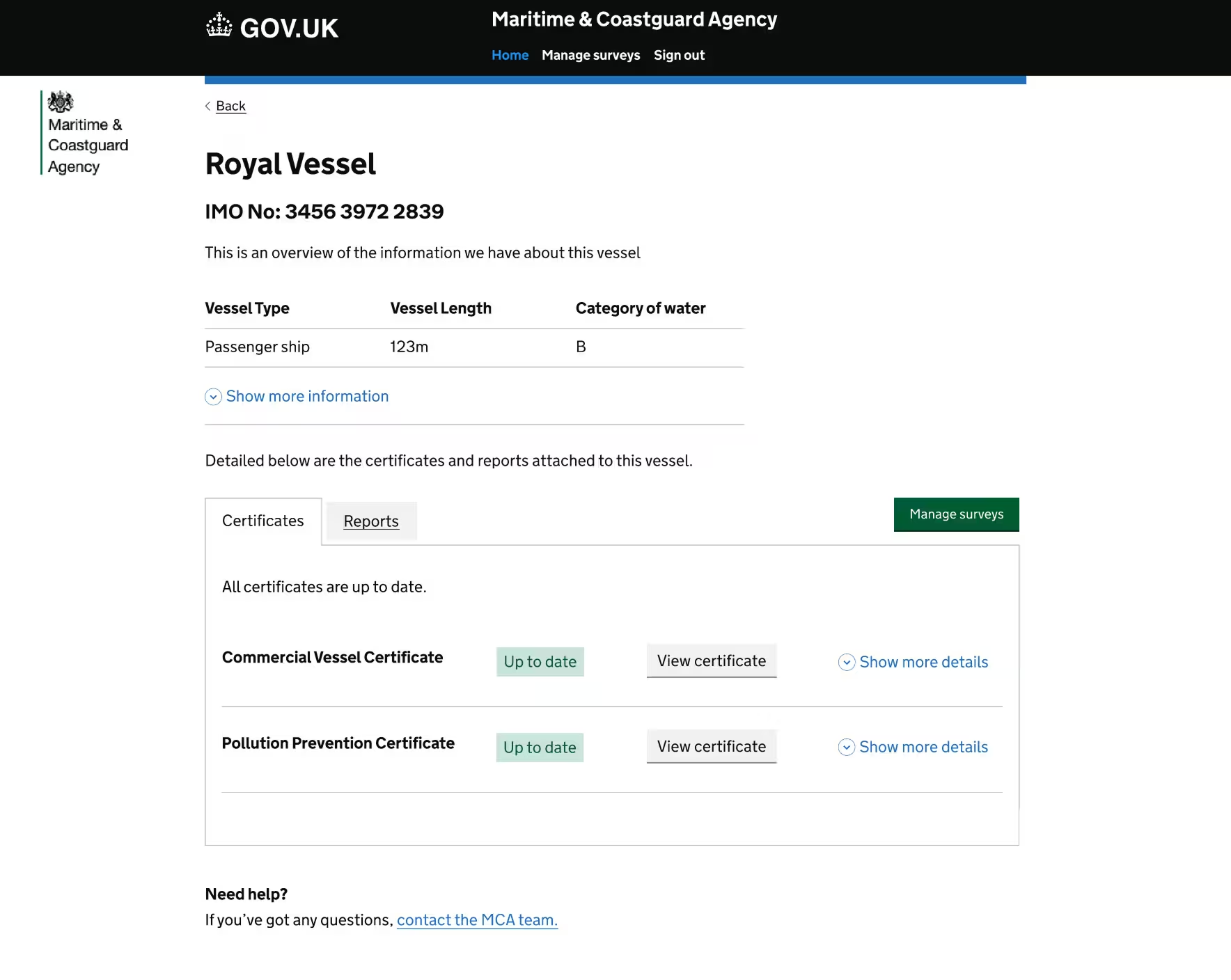
A central place for operators to view certificates and reports and track their status
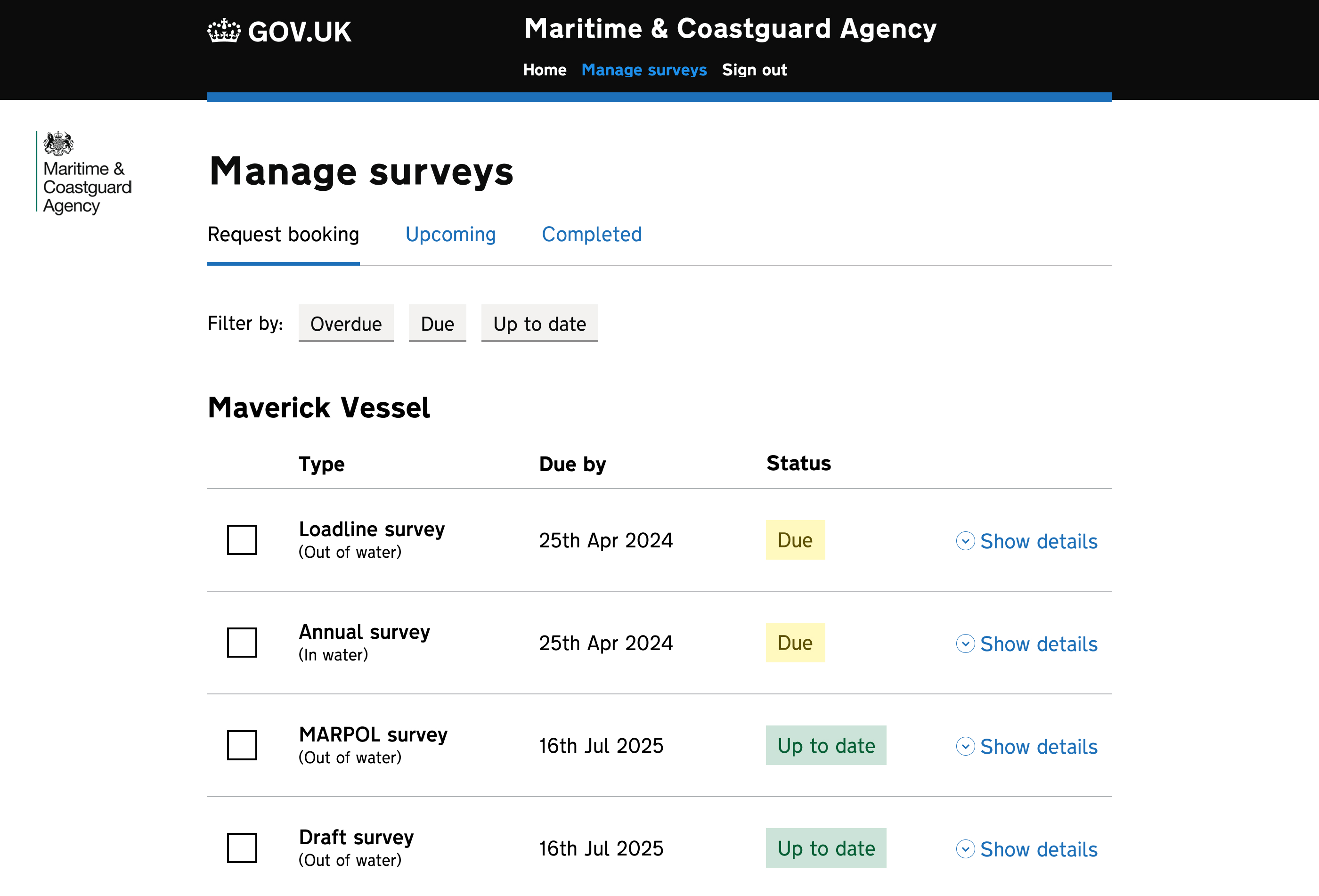
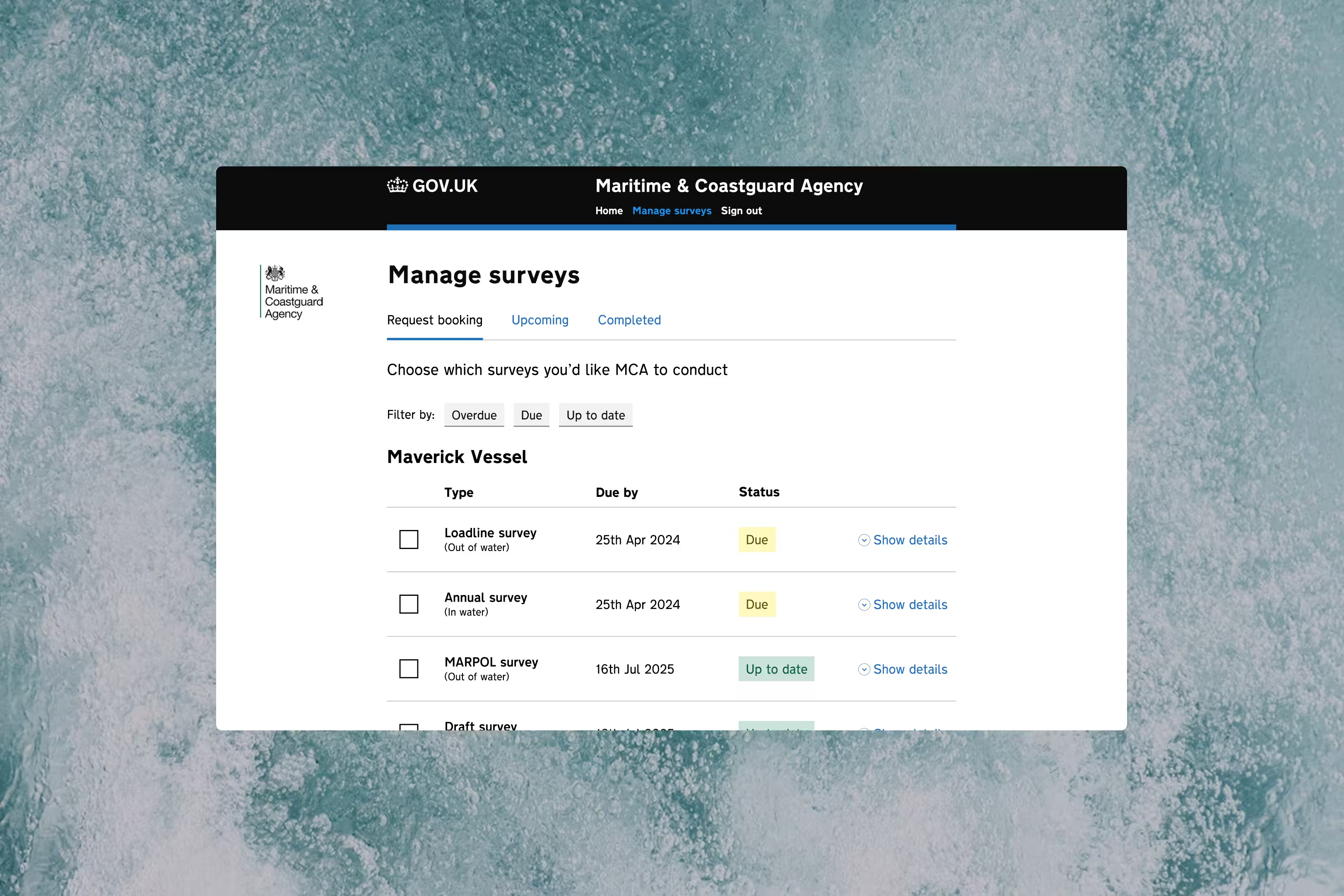
Managing and booking surveys
Instead of tracking survey requirements manually, ship operators can see all upcoming surveys per vessel and can book them in one central platform.
Picking a date based on estimated availability
The date picker shows estimated surveyor availability for each day based on the vessel's location. This helps users make informed decisions and improves booking success rates.
The standard GOV.UK date picker had limited functionality, so I proposed an enhanced design to meet user needs while maintaining accessibility standards.
I submitted the component as a proposal to the GOV.UK Design System.
The standard GOV.UK date picker had limited functionality, so I proposed an enhanced design to meet user needs while maintaining accessibility standards.
I submitted the component as a proposal to the GOV.UK Design System.
Setting expectations
User research revealed ship operators felt anxious about what to expect during surveys. The new service provides step-by-step guidance on how to prepare and what to expect on survey day.
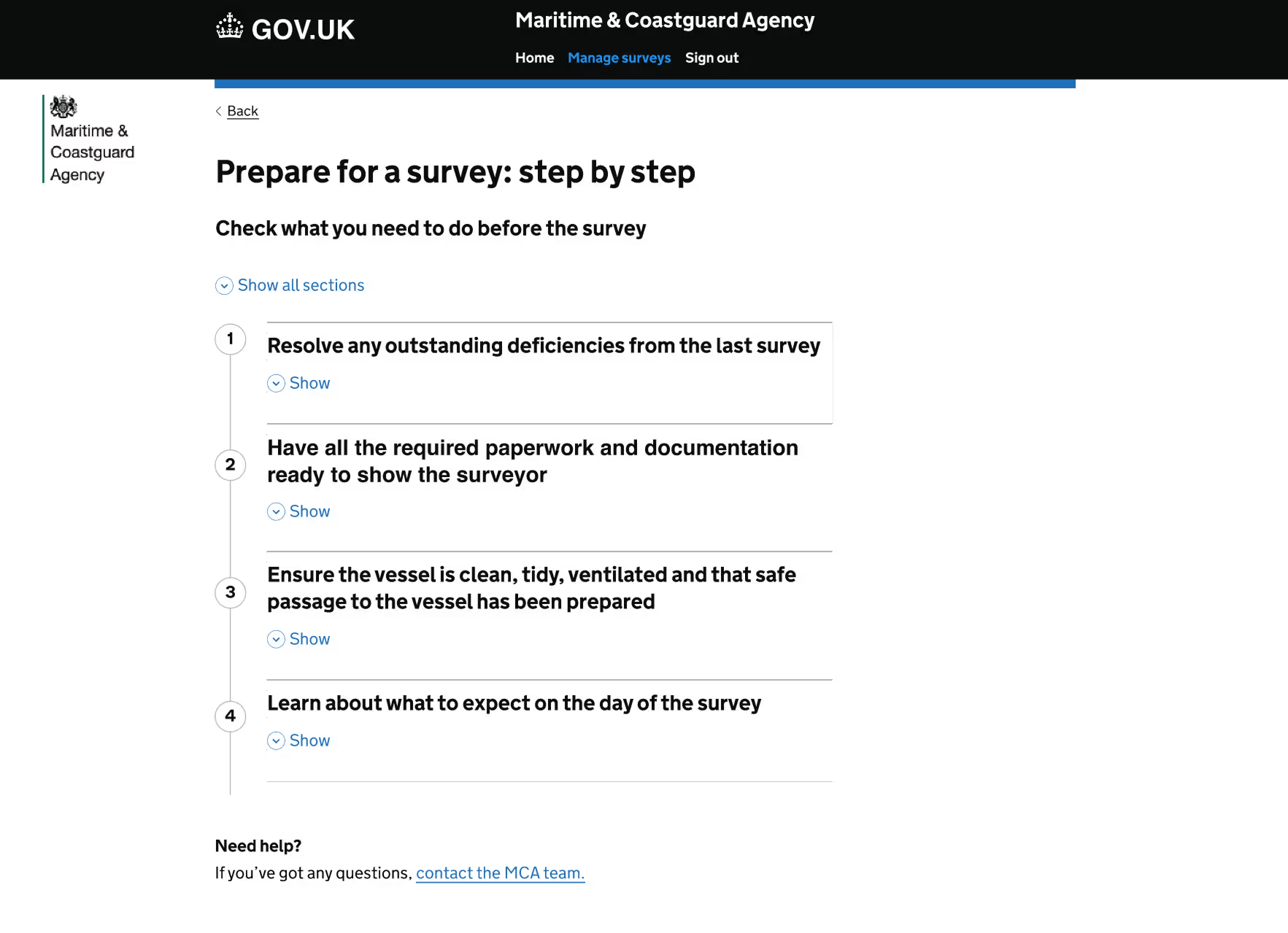
A step-by-step timeline with progressive disclosure for added detail
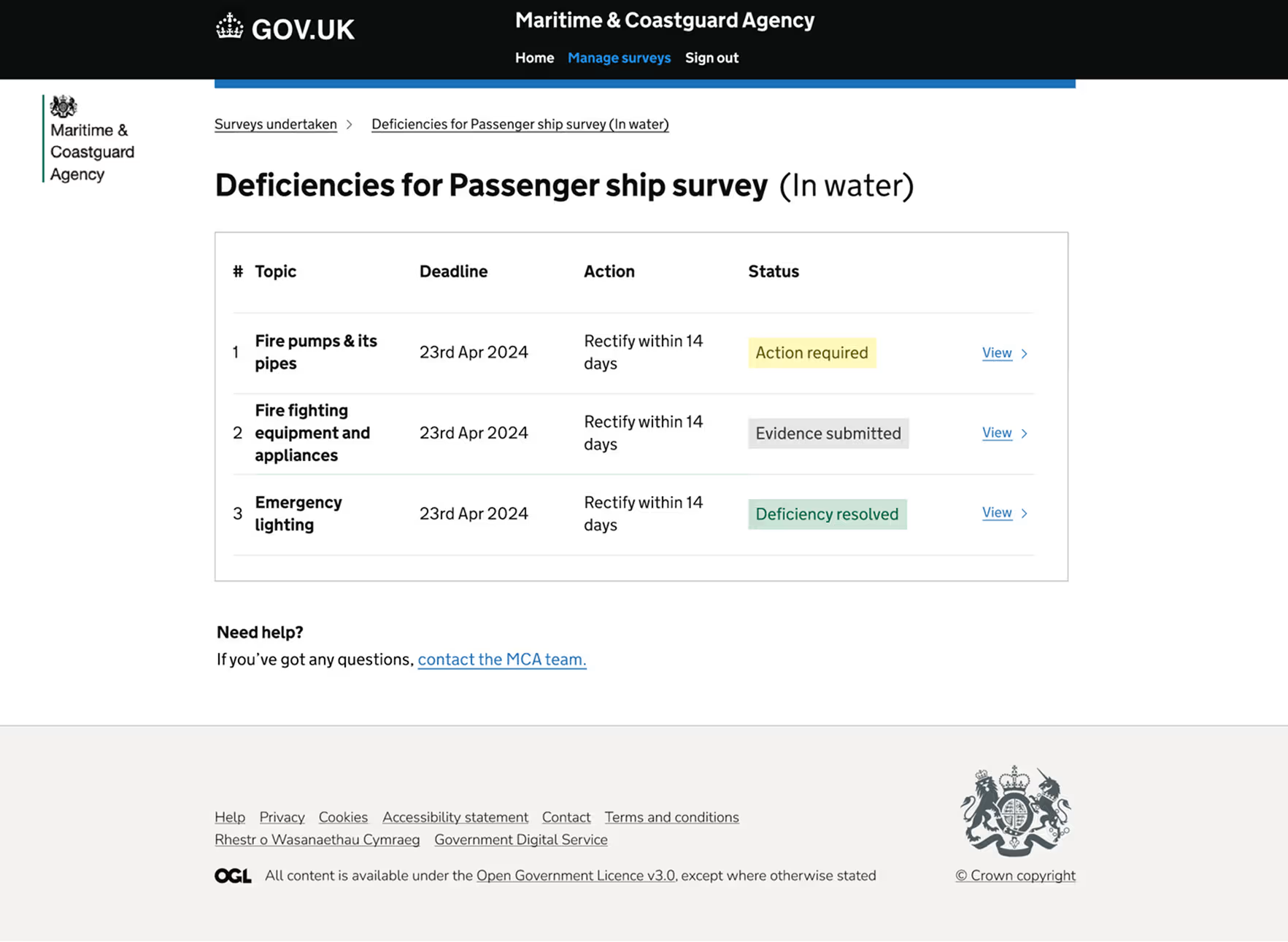
Resolving issues post-survey
Non-compliance deficiencies found post-survey were often managed and resolved through tedious email back-and-forths.
To tackle this, we designed a place to view and manage all deficiencies, including uploading evidence of resolution.
To tackle this, we designed a place to view and manage all deficiencies, including uploading evidence of resolution.
Process
Untangling highly manual and messy workflows
We explored complex user journeys, beginning with the registry of a vessel, and continuing with the process of keeping a vessel compliant over a 5 year period; organising surveys and renewing registry.
As well as mapping customer actions and their experience (pain points) we mapped the business processes to understand how MCA staff’s experiences intersect with customers’ experiences.
As well as mapping customer actions and their experience (pain points) we mapped the business processes to understand how MCA staff’s experiences intersect with customers’ experiences.
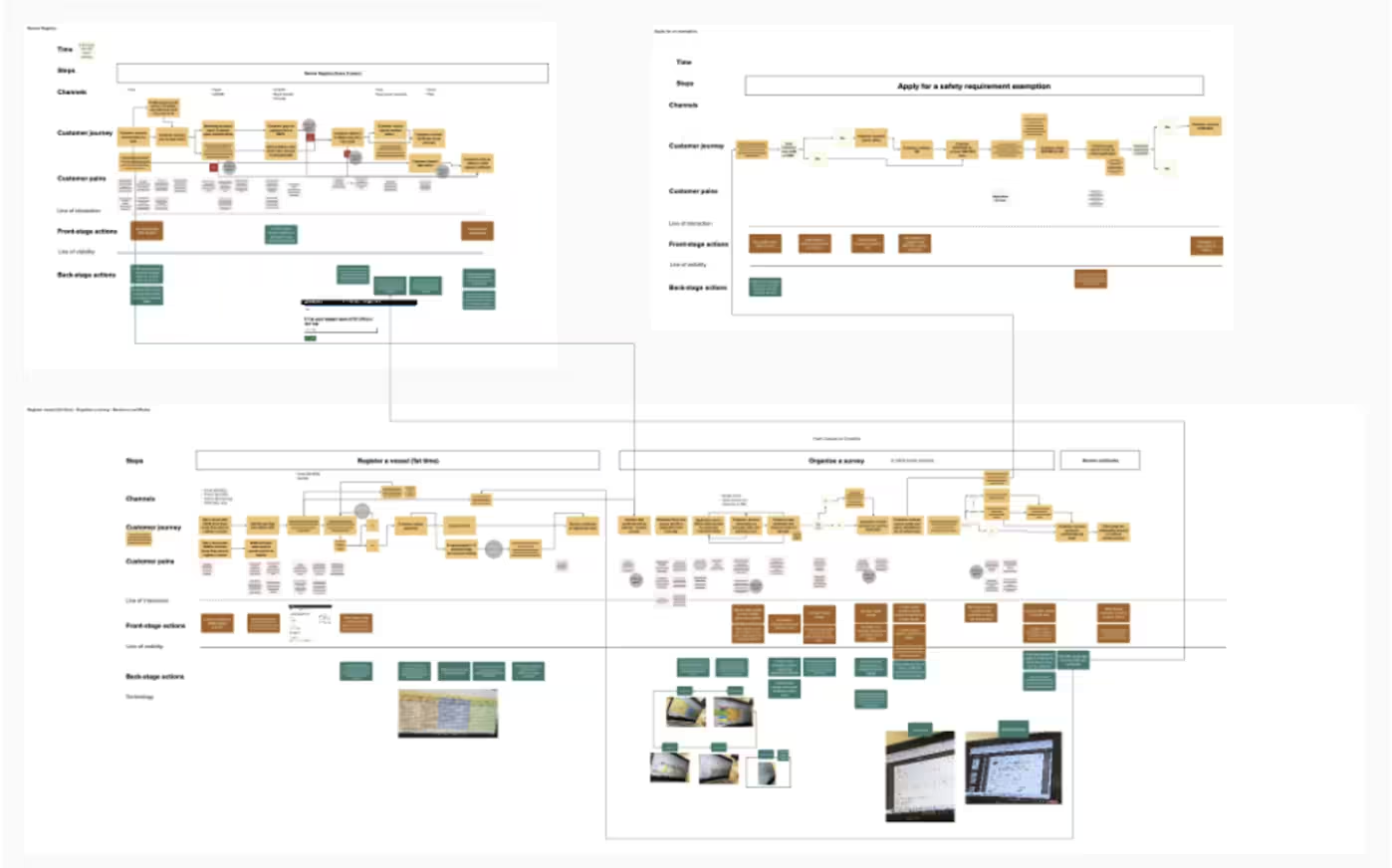
User journey mappings which were then used to create 'to-be' service blueprints
Identifying trade-offs through sentiment mapping
We mapped sentiment across key tasks for customers and MCA staff. Red/orange indicated pain points; green indicated satisfaction.This revealed four priorities: survey management (especially booking/closeout), technical support for interpreting legislation, registration administration for smaller operators, and payment processing.
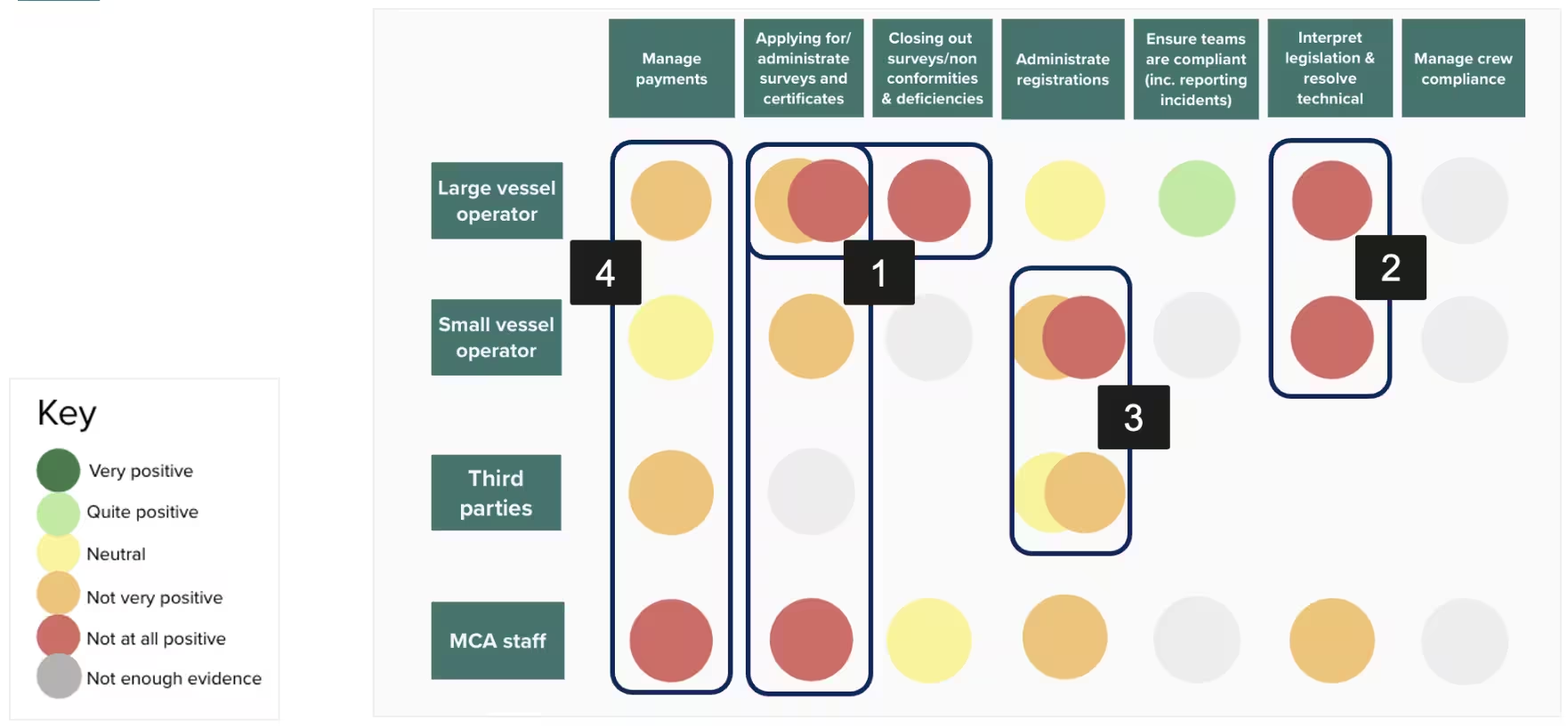
Sentiment per key task and prioritisation
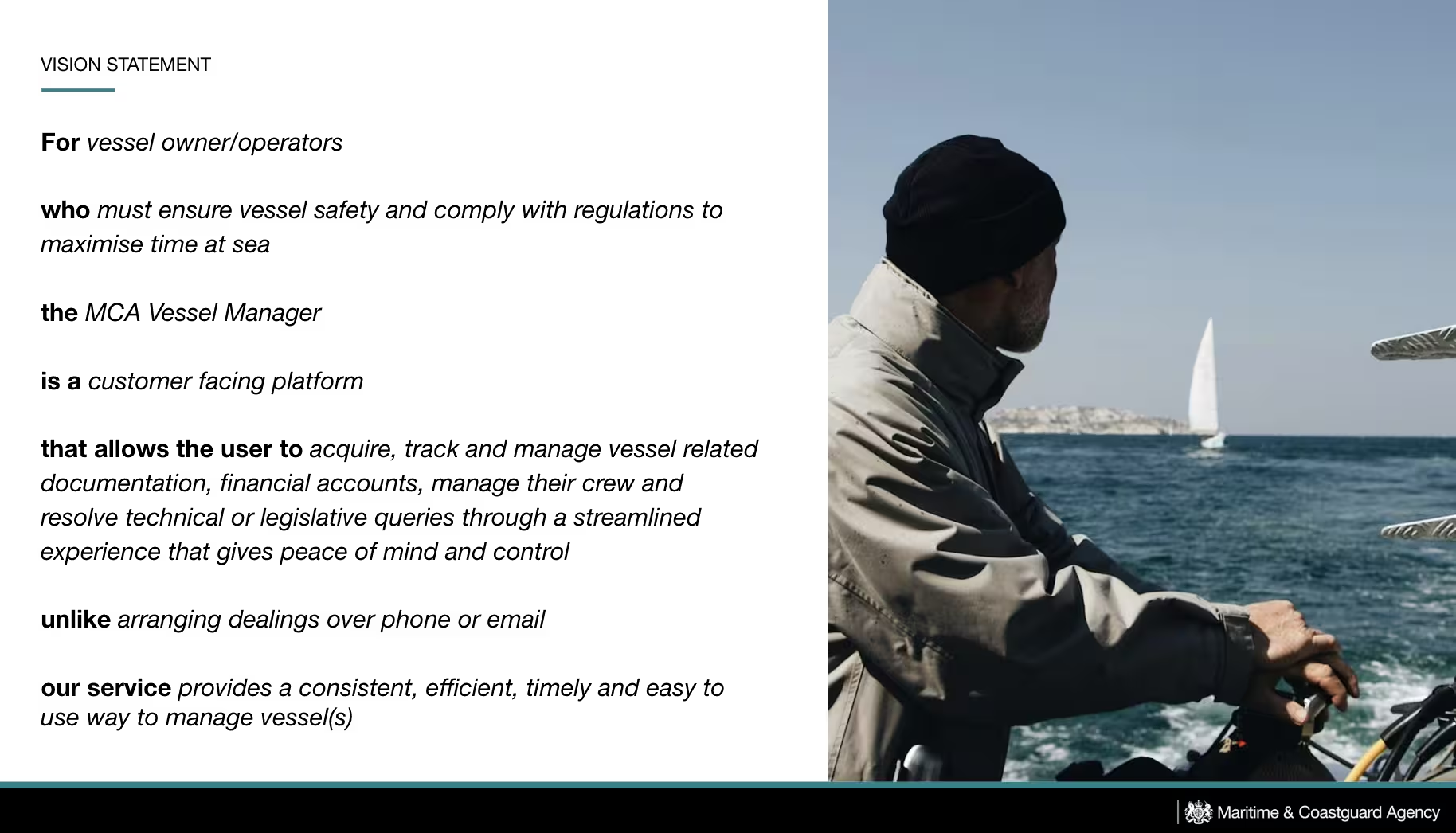
Setting a vision for the future service
We facilitated a service vision workshop, where twelve senior stakeholders convened to conceptualise the ideal future service for vessel owner / operators.
They were prompted to think broadly about all potential solutions and the benefits these could provide.
Additionally, they were tasked with identifying unique advantages that the envisioned service would offer compared to existing alternatives
They were prompted to think broadly about all potential solutions and the benefits these could provide.
Additionally, they were tasked with identifying unique advantages that the envisioned service would offer compared to existing alternatives
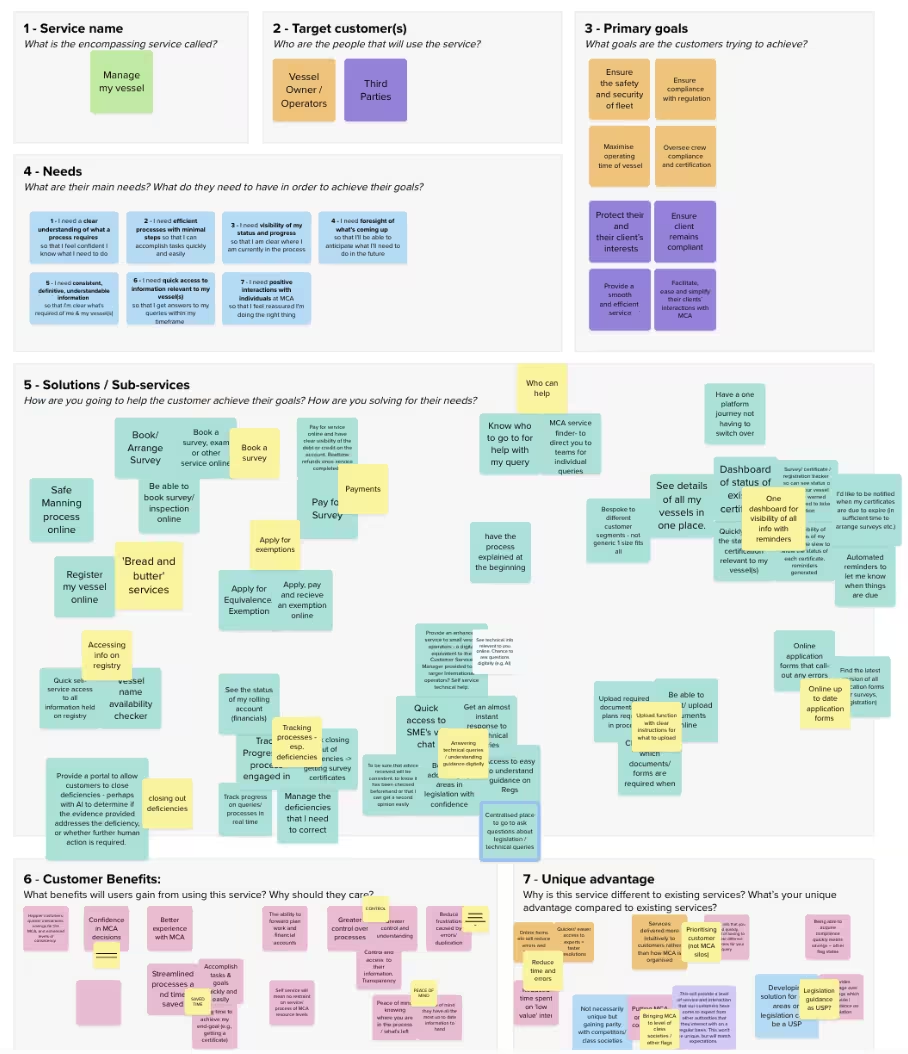
During the workshop, senior stakeholders filled the vision canvas above
Outcome
The service was designed to reduce application time from weeks to days by eliminating constant manual back and forth's via email and phone.
Prototypes tested with 15 ship operators showed a 67% reduction in time to complete key tasks.
The new service is expected to save ship operators 4 hours/week by digitising manual processes
Prototypes tested with 15 ship operators showed a 67% reduction in time to complete key tasks.
The new service is expected to save ship operators 4 hours/week by digitising manual processes
‘Having this online portal would make it much easier, more efficient. It would keep all interactions in one place. It would mean no longer having mountains of paperwork’ - Operator, Small vessel