Alivia
Launching an affordable digital healthcare service for Peruvians
partner:
INTERCORP HEALTH PLATFORM
role:
PRODUCT DESIGN LEAD & co-founder
DURATION:
9 MO
YEAR:
2020 - 2021
Overview
I was Product Design Lead and co-founder of Alivia, a digital health start-up for Peruvians. Our Web App offered same-day access to 11 medical specialties and reached 600 paid consults within 10 weeks of launch. A 12-person team covered design, operations, growth, and programming.
Results:
Results:
- Achieved an NPS of 83, praised for user-friendliness and top-notch medical care.
- Increase in monthly active users through continous iteration.
- Improved conversion rate by running A/B tests and optimising the experience.
After undergoing iterations to its value proposition, the platform remains operational to this day, having served over 23,500 patients.
Problem
Peru has a flawed public health system, with lower-income Peruvians having to wait weeks, if not months, for appointments, only to receive impersonal care upon arrival. When the COVID-19 pandemic hit, these problems only worsened. Despite initial behavioural reluctance, the pandemic increased the willigness to adopt telemedicine. The challenge was bridging the gap between low digital confidence and a digital health solution.
The Solution
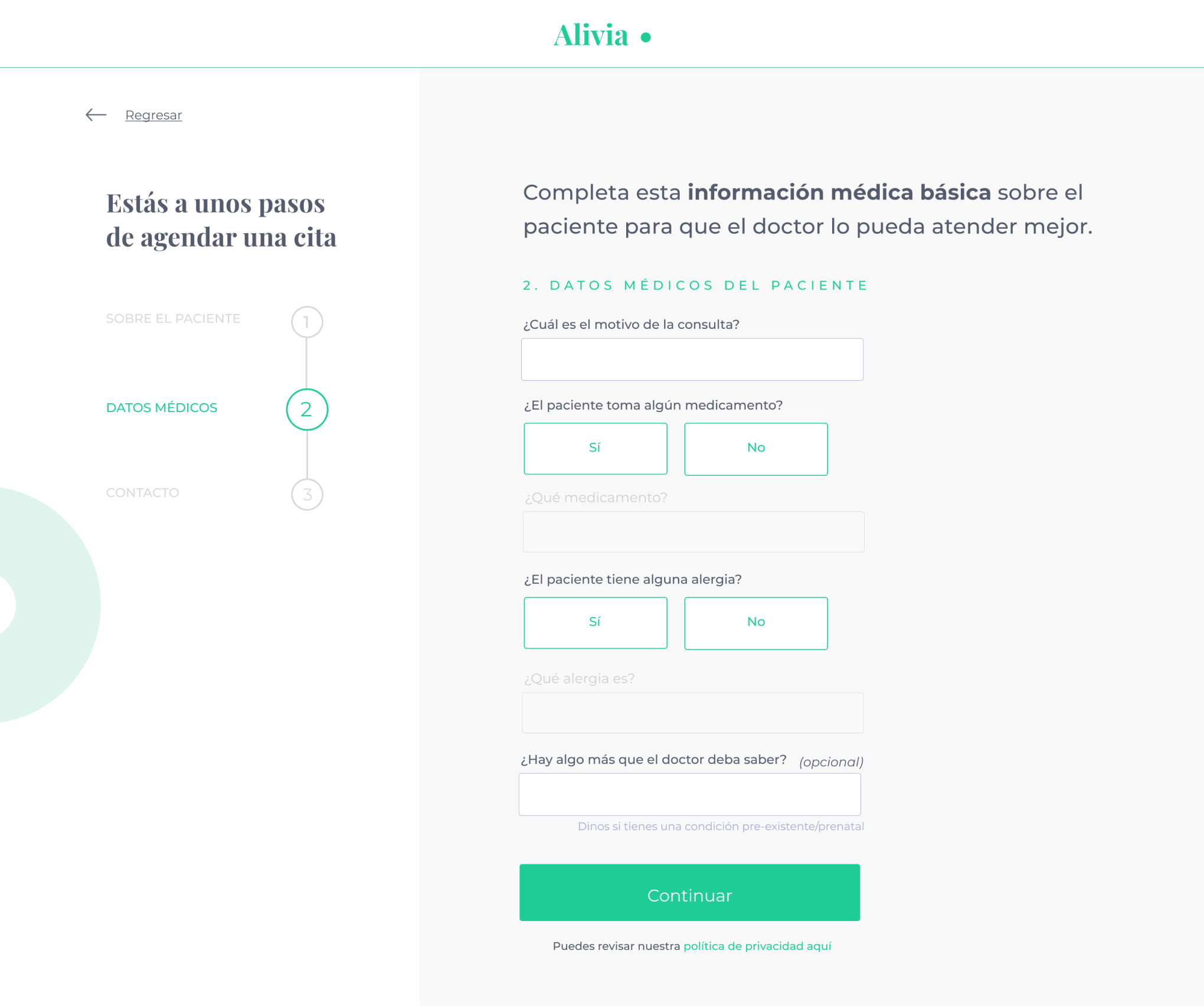
Seamless appointment booking
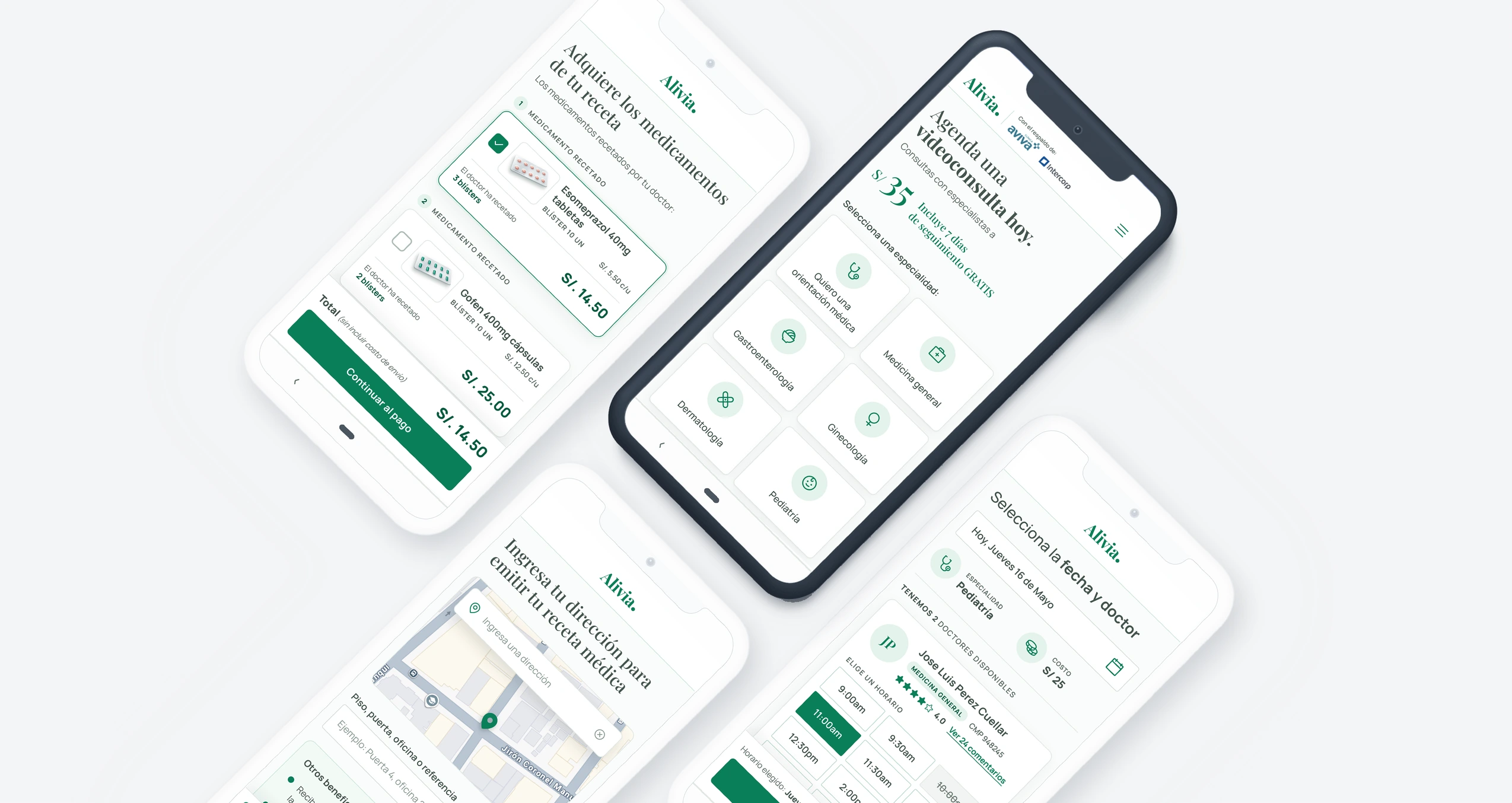
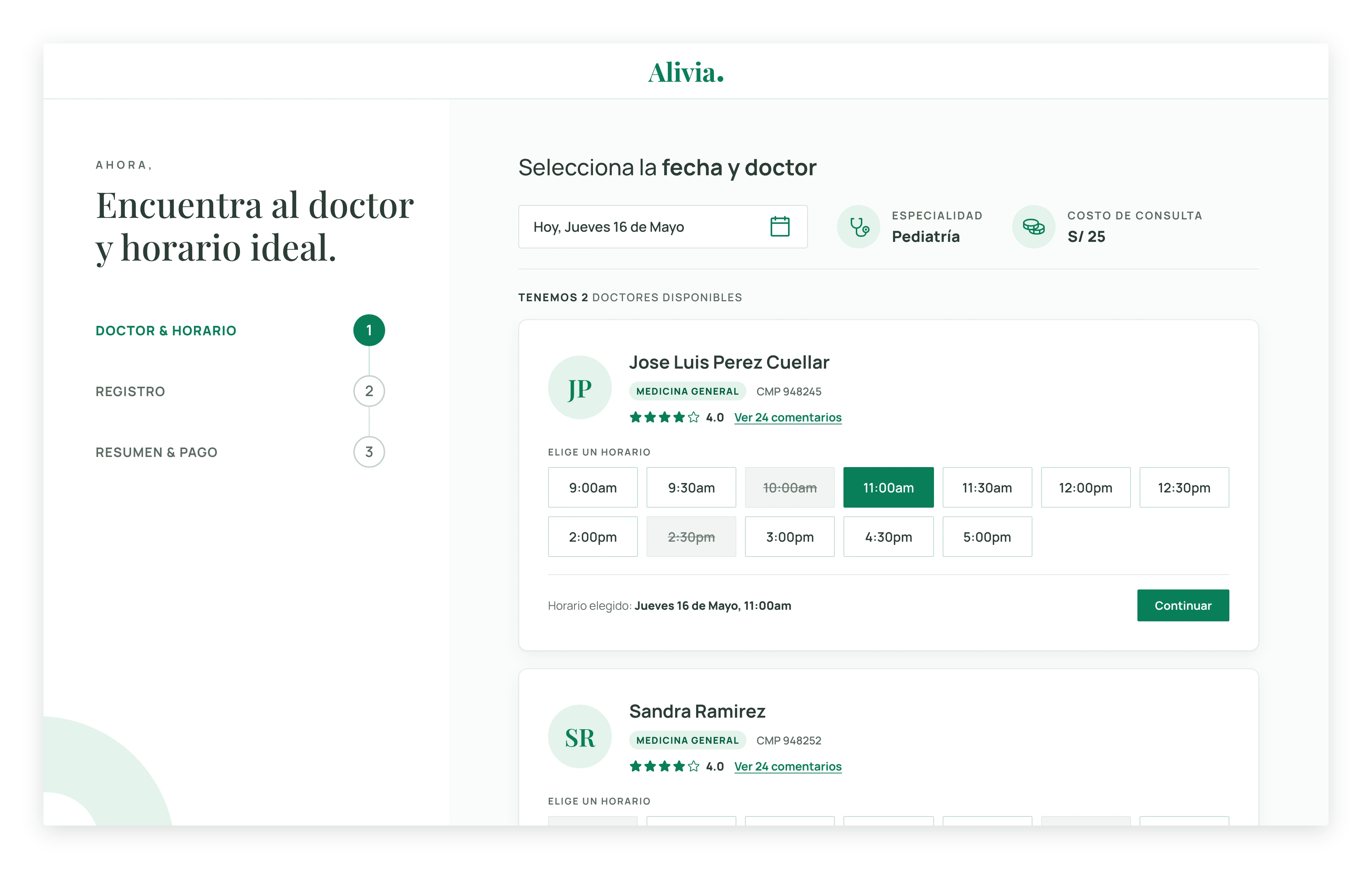
Patients can select their preferred doctor from 11 different medical specialties, supported by reading comments and ratings from other patients' experiences with each doctor.
We conducted numerous of A/B tests to optimise the booking funnel and increase conversion.
We conducted numerous of A/B tests to optimise the booking funnel and increase conversion.
Tracking the health of your family
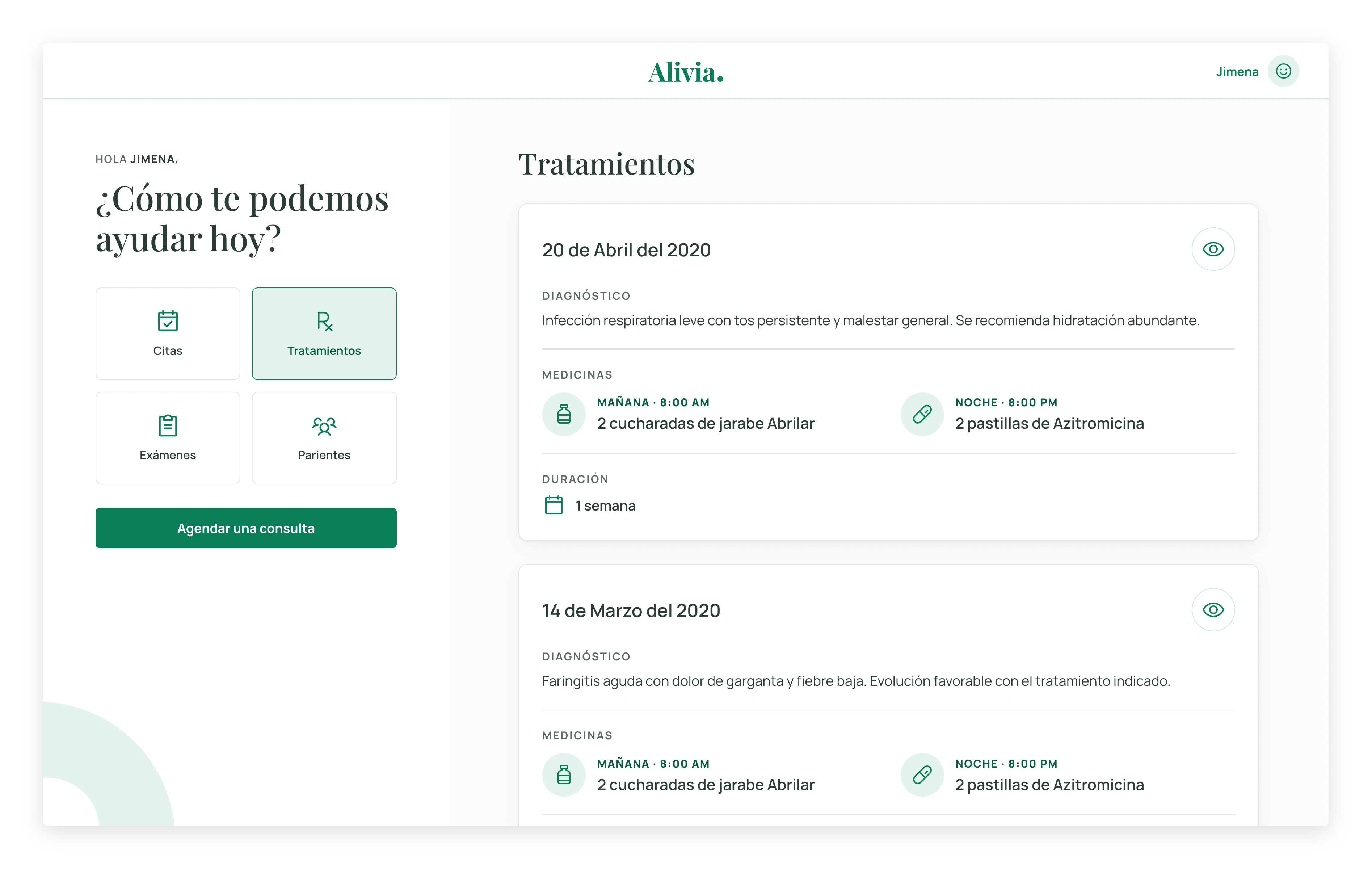
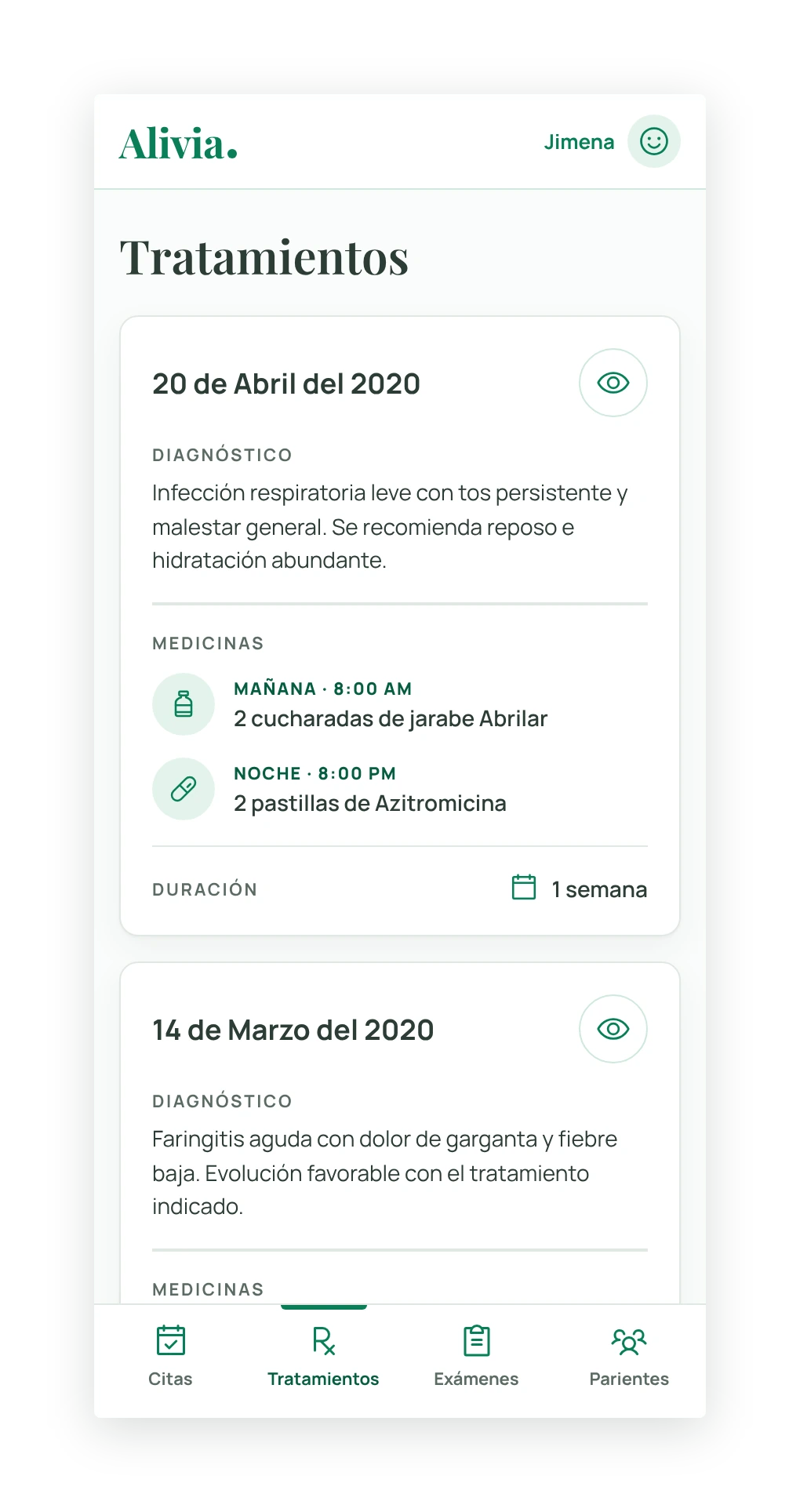
Patients who decide to create an account are able to opt into sharing their medical information with other family members and create a profile for their children. This gives them access to their medical health history (including past treatments, lab exams and medical appointments).
Peru's first electronic prescription
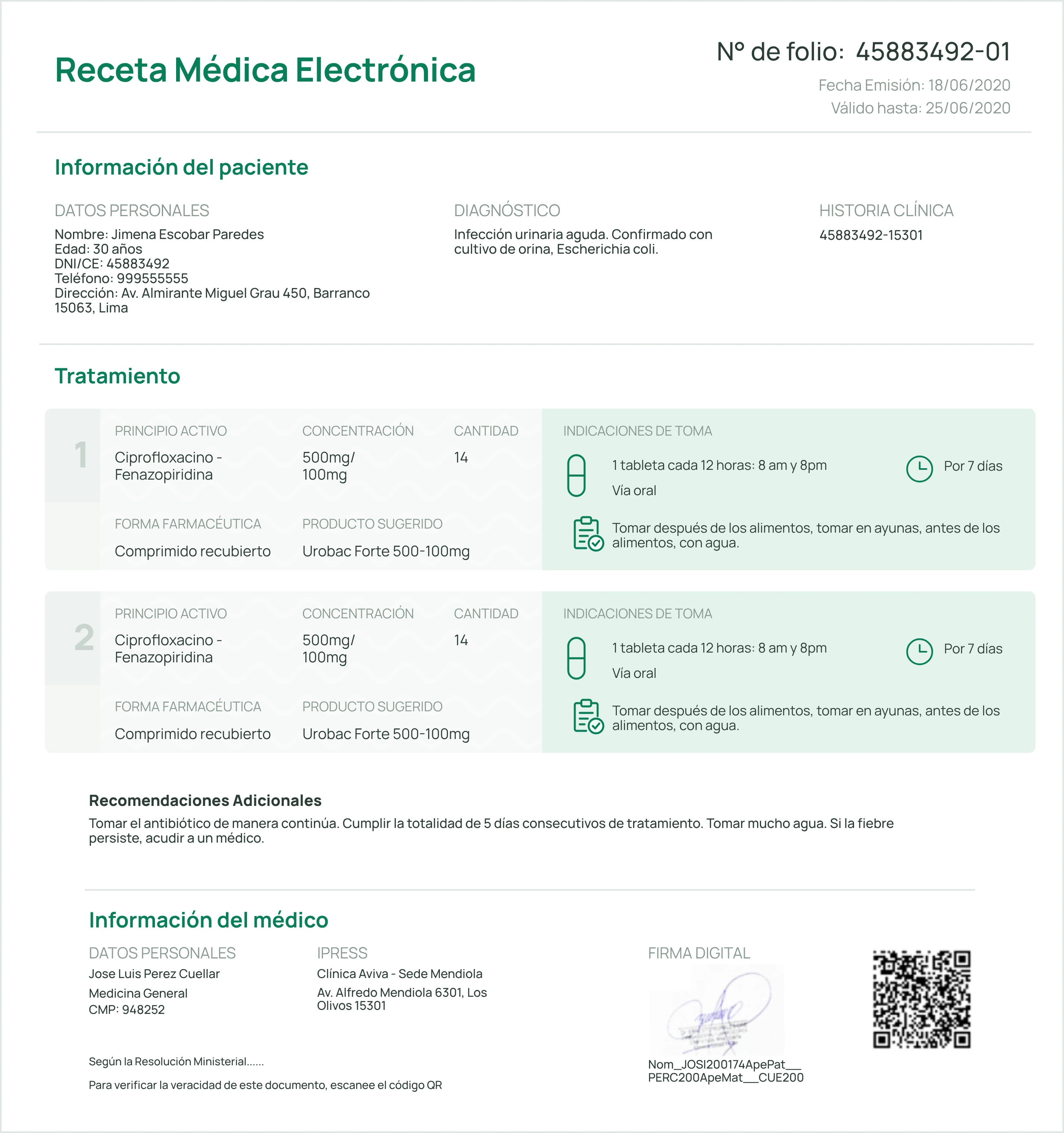
Doctors in Alivia are able to emit legally valid electronic prescriptions that are accepted in pharmacies nationwide. These are signed electronically to avoid forgery.
Easily acquire prescribed medications
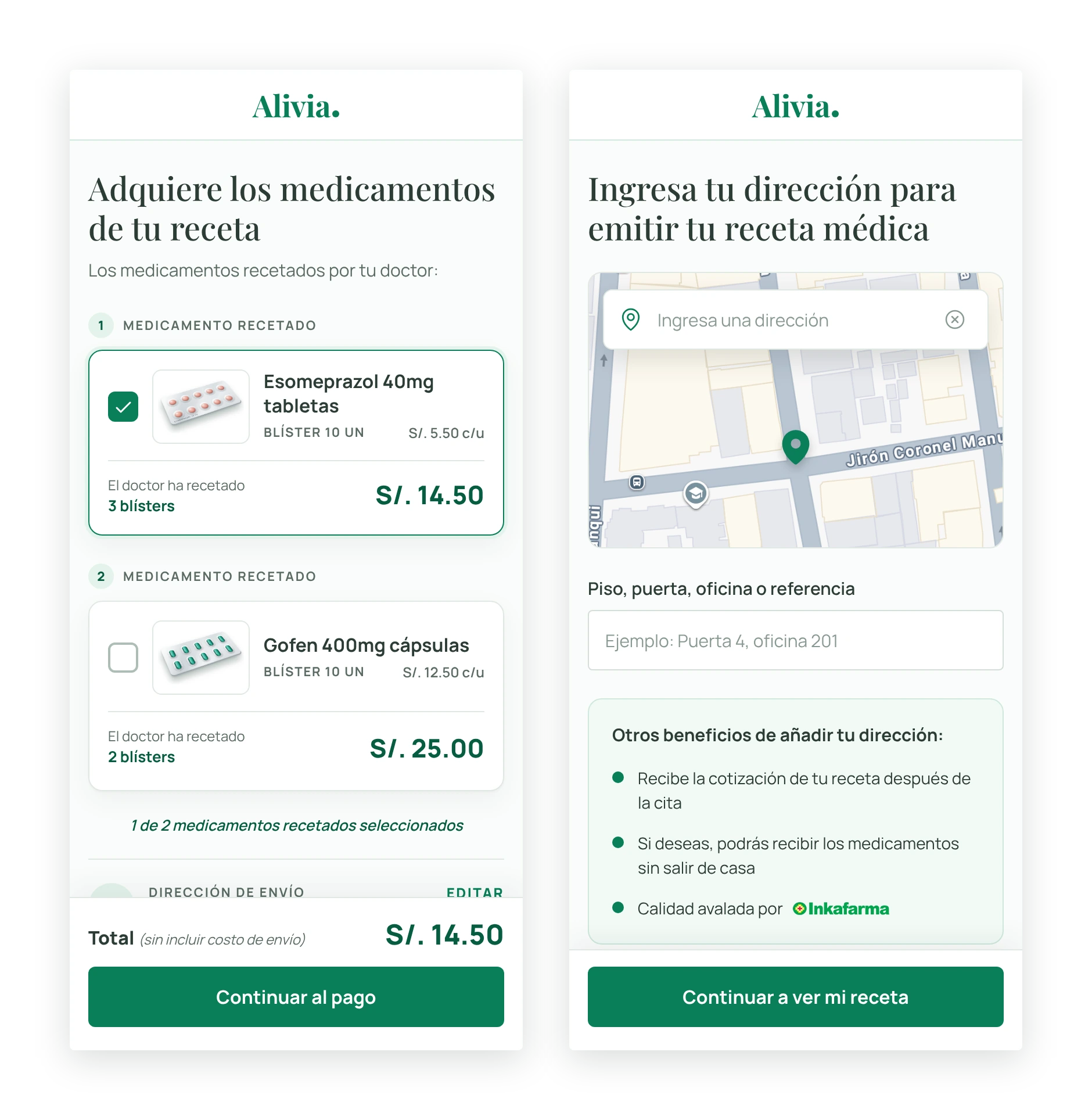
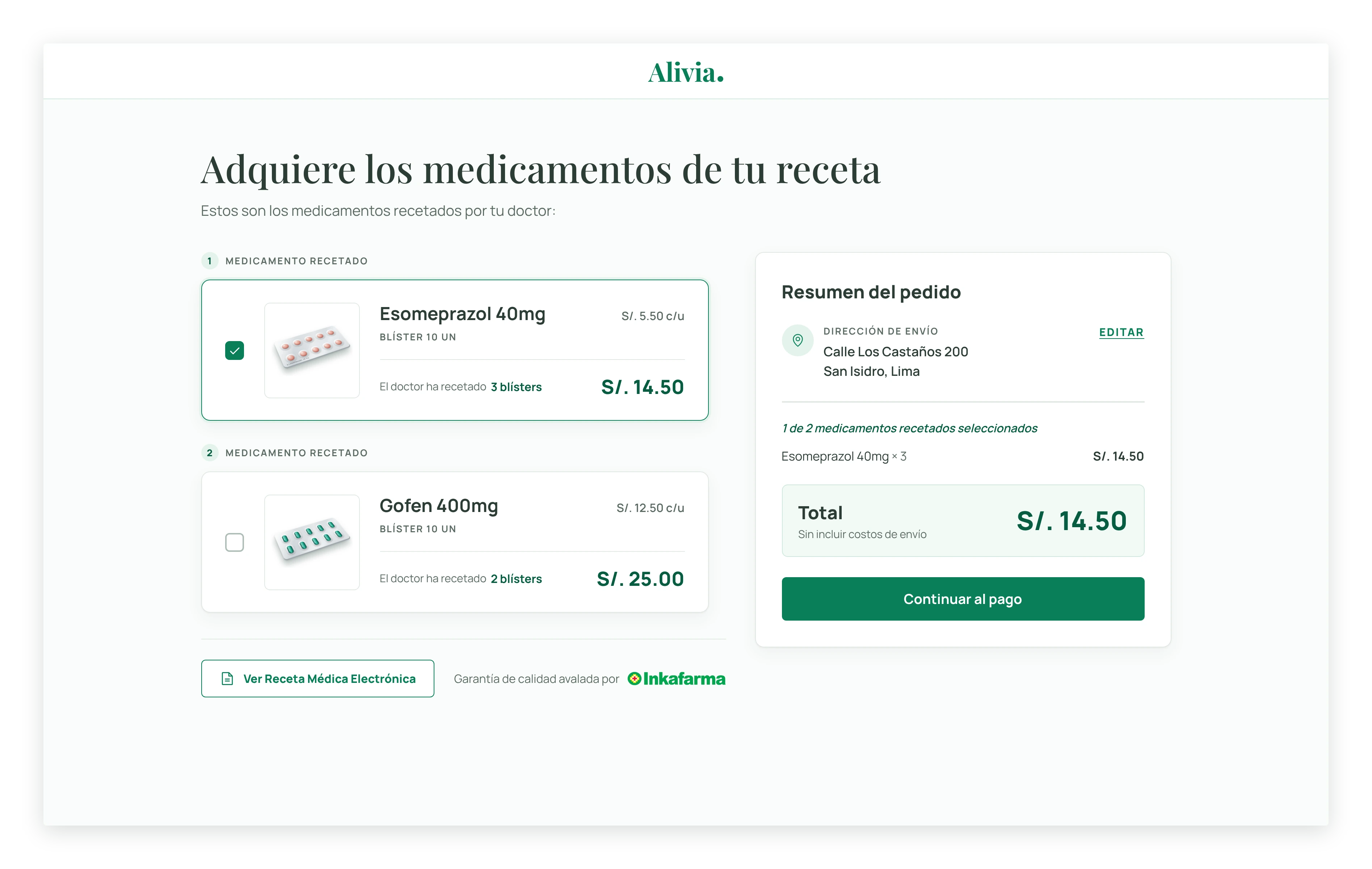
To offer a an end-to-end experience, we integrated our service with Inkafarma, Peru's biggest pharmacy chain which operates over 1200 pharmacies across the country. This integration allows patients to easily access and obtain the medications prescribed to them. Through an API, their e-commerce validates stock availability for prescribed products and gives patients the option to have it delivered where they please. This integration differentiated Alivia from other Peruvian telemedicine services.
Doctor tools
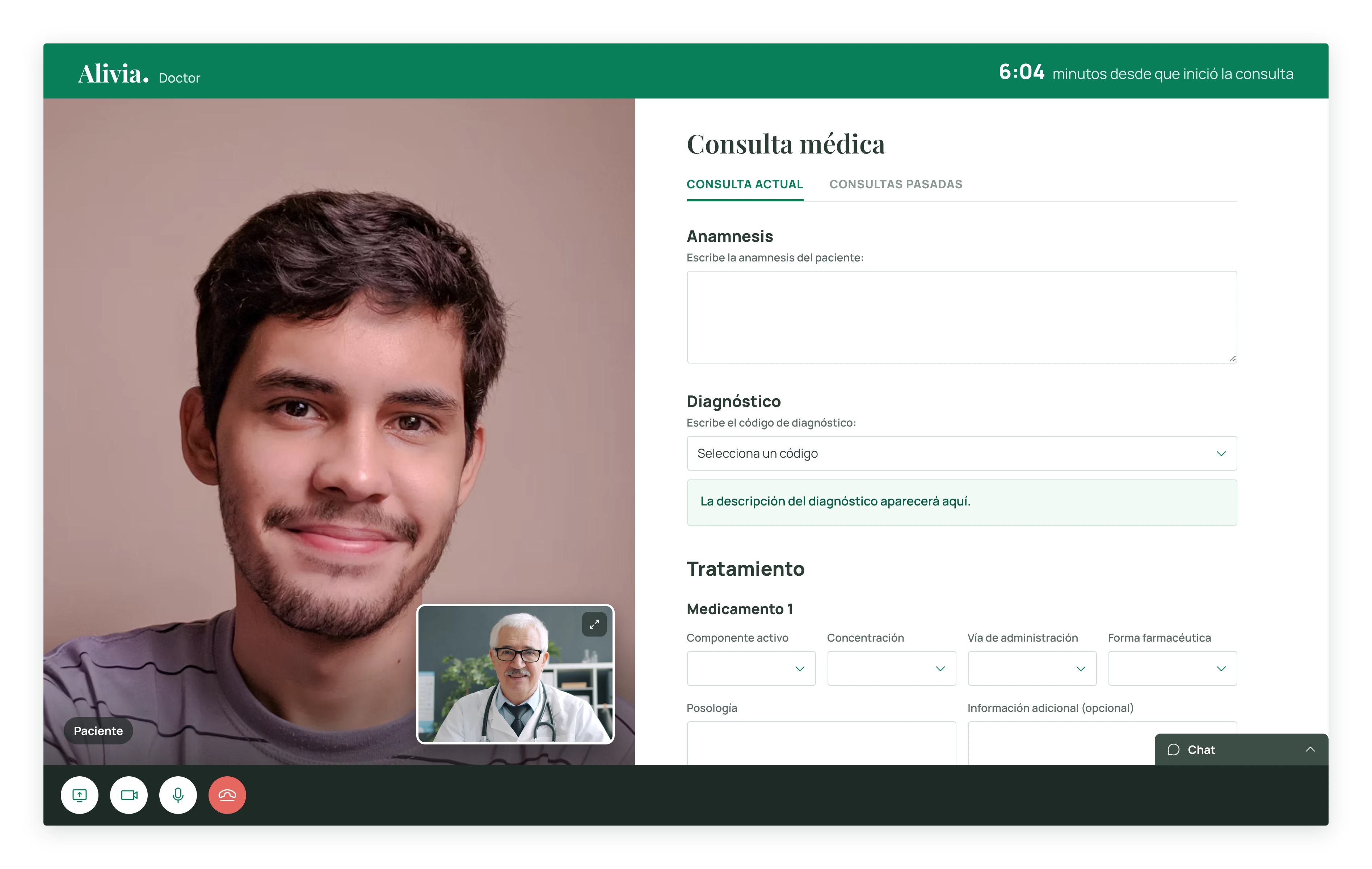
Doctors have a wide array of tools at their disposal. For example, they're able to view a patients medical health record and fill out their medical treatment plan while simultaneously attending the video consult.
Process
We launched a telemedicine service to tackle a problem that transcends the pandemic: public healthcare in Peru is immensely inconvenient, where one must wait weeks to get an appointment and the service tends to be deficient. We ran user research across Peru to immerse ourselves in the problematic:
I wake up at 4am to travel to Huancayo, the nearest city with a hospital. There I queue and wait until they tell me whether I can get an appointment or not. If not, I have to try again the next day - Middle aged woman, Chongos Bajos, Peru.
To test demand for a digital health service, we rapidly built a functional prototype in under a week by integrating tools. A landing page where users chose their symptoms was created using Figma and Webflow. A Landbot chatbot gathered patient details. Calendly integration with Zapier let users schedule appointments and automated emails containing a link to the video consultation.
Our initial process worked effectively until demand surged. This increasing demand, combined with positive qualitative feedback from patients and doctors, gave us confidence to design and build a more robust and scalable solution. These efforts ultimately led to the creation of Alivia.
My role included:
- Providing guidance to the design team in the design of new features, as well as the optimisation of existing ones. And occasionally getting hands-on.
- Serving as the conduit between the design and development team, communicating and explaining the rationale behind our design decisions.
- Designing A/B tests to optimise the appointment booking process and increase conversion rates.
- Conducting weekly interviews with patients and doctors to identify areas of improvement and potential pitfalls in our service.
- Performing moderated and unmoderated usability tests with patients to identify usability issues and enhance the overall user experience.
- Presenting our progress to senior stakeholders on a weekly basis to ensure their continued support for and investment in the project.
- Designing surveys sent to customers to evaluate product-market fit and measure the net promoter score.
Outcome
As the one responsible for leading the design team, I fostered a culture of continuous learning and iteration to improve the product. This experimentation-driven approach was fueled by qualitative and quantitative feedback from patients and doctors, which drove our decision-making process.
A key challenge was ensuring a great experience for both user groups – patients and doctors. While recruiting doctors proved difficult, retaining them on the platform depended heavily on providing them with well-designed tools to allow them to perform their jobs effectively. To address these concerns, the team tested new features weekly, implemented A/B tests, and closely monitored the conversion funnel, allowing us to implement daily product improvements aimed at increasing value for both user groups simultaneously.
After successfully launching the service and continuously iterating it for twelve months, I transitioned to a work on a new initiative. The talented team I helped build continued to design and operate the service.
Credits
PRODUCT MANAGEMENT
maria paula loayza
kevin armstrong
kevin armstrong
product design
KEVIN ARMSTRONG
MALU ROMERO
SANTIAGO SOTOCA
MALU ROMERO
SANTIAGO SOTOCA
tech lead
christian bedón
operations
JACQUELINE SOLARI
ESTEFANíA RODRIGUEZ
ESTEFANíA RODRIGUEZ
sponsors
jorge o'hara
hernán carranza
hernán carranza
business lead
alessandra ponce